Energy of the Site:
The current state of the project site feels dormant, deflated and dead. A large field of gravel covers the majority of the site, giving the appearance of an urban desert. Rusting steel and decayed wood remind us of the sites use as a train yard, but these feel like relics of an industrial era that no longer exists. Large transmission towers sit like monuments to the train yard past.
As modern transportation becomes more efficient, less energy and land intensive and more integrated into urban systems, the need for vast desert-like train yards disappears. Our site is in the early stages of this transformation from industrial scale to human scale, and offers a unique opportunity to become a case study for cities with aging transportation infrastructure.
By celebrating the transportation corridor cutting through our site, I hope to open new opportunities for broader community engagement. For residents it will be a place to connect with the mostly affluent transient population that travels through the site on a daily basis. For the commuters, it will frame a better view of urban communities, and entice them to visit the site.
The site will be the center of this interaction, but the greater transportation corridors radiating outward, will grow like roots in a garden, connecting with the networks of West Philadelphia and University City.
Life of the Site:
As the site’s transit network is transformed into a metaphor for energy, the landscape will become the life where this energy is transferred. Gardens, Orchards, and Livestock will replace the gravel beds of the former train yard. Terraced fields, and Perennial gardens will line the sloped sides of the newly created green corridors. Native vegetation will thrive and will encourage a diversity in wildlife that will add to the layers of life on the site.
The life of the community will also be nurtured and cultivated. Walking paths, parks, and other outdoor amenities will encourage use by the community here and beyond. Community gardens will give way to community markets and encourage engagement by surrounding neighborhoods.
In collaboration with the Philadelphia Zoo, a small demonstration farm will teach city residents about agriculture and inspire others to start their own garden, orchard or chicken coup.
Material of the Site:
The site is rich in Stone, Steel and Wood. these materials have been transformed from their natural states for their use in the train yard of the past. These materials will not be celebrated in the sites new design. Doing so will require further investigation into the material properties, potential contamination and possible future uses as I move forward with the site design.

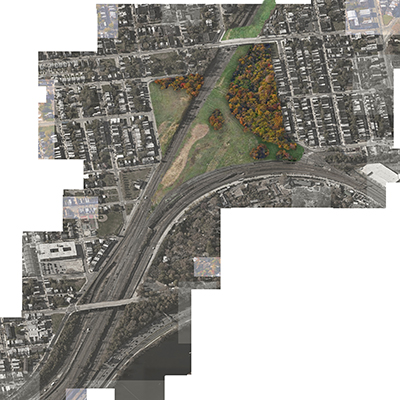
Year 0

Year 5 Site Remediation
Year 10 Grow Orchards
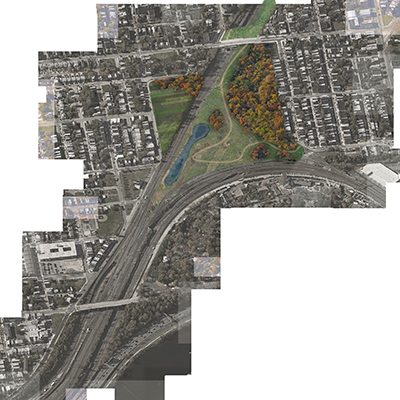
Year 15 Established Park System
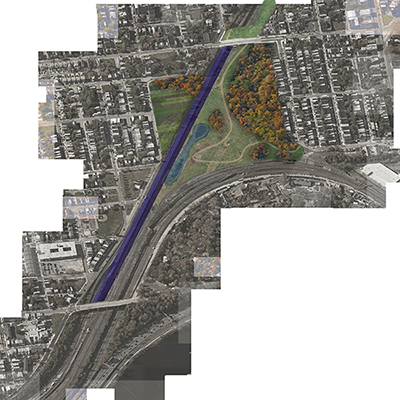
Possible Alternative Energy System
 neil ryan young
Neil, you have a very successful way of representing your ideas with these photo montages, and showing them in different time periods makes them even richer. I’d love to see some more for other areas of the site where you have different program ideas in mind.
Karlene
LikeLike
These diagrams are effective in communicating change over time and offer a good foundation to continue to work on. Some considerations and next steps: 1) year 5 – site remediation; is this the appropriate time scale? Could your site remediation offer a research opportunities (i.e. test plots) for the local institutations and environmental agencies? If so, there are some design opportunities for the field layout and organization – something to consider and research as you develop. 2) Orchards are not really orchards. If you want orchards, show us a grid of orchard trees, not woodlands. Why orchards? outreach to community for food source? Too early post-remediation for edible fruits? If so, then perhaps some toxin-sucking tree species. 3) Establish Park System – show more connections to the streets/along the tracks as necessary. 4) Alternative Energy System – okay. But how does it filter/feed/supply the community and park system? How do you graphically communicate this?
Each of these layers should extend (and color-ize) those systems/parts of the community that begin to engage with your park system over time. Don’t stop at the porous boundaries of the site. Each of these diagram phases could have a second set of diagrams that articulates the user/social/neighborhood reaction to these remediative phases. Keep going with these – and start to define (write in a list) the various users/levels of engagement that occur during each phase.
LikeLike