Updated on 02/12
The following is a section of my midterm presentation. I will be working on energy diagrams (see WK05.2 for sketch ideas) next. My midterm presentation will focus on the overlay of these systems with design proposals that celebrate the harvest of energy, water and food.

Based on the law of three’s, the fourth way is a solution that seeks to create a lasting energy independence for the neighborhood bordering our site, and creates an infrastructure that provides a scaffolding for future development.






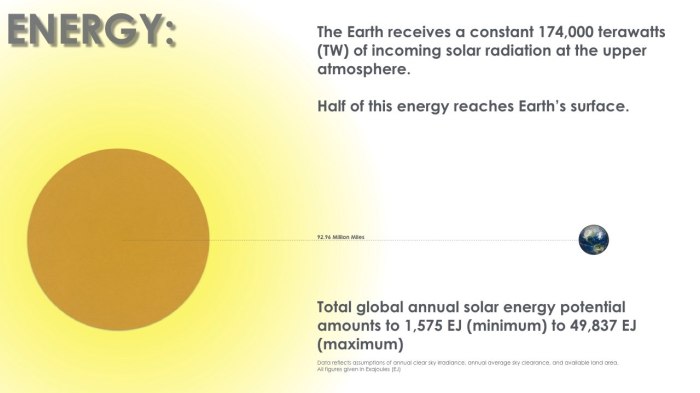
The sun provides the earth with enough energy every day (in watts) to power human machines for decades.
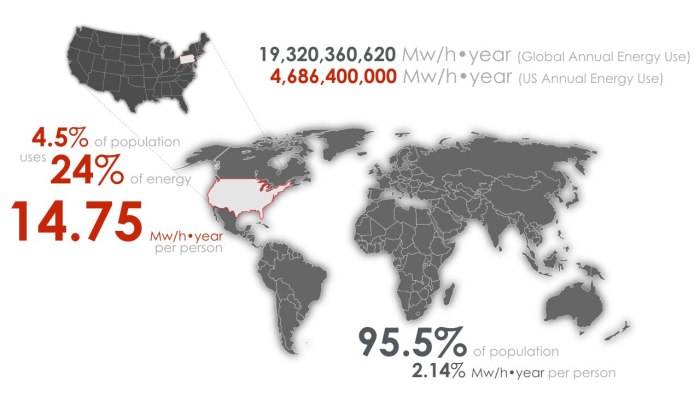
Current US energy use dwarfs the developing world. The US population is less than 5% of the total world population, but uses over 24% of the total world’s energy (includes all fossil fuels, nuclear and renewable energy).

Philadelphia peak energy use (recorded in July 2006) surpassed the combined full capacity of Limerick and Three Mile Island nuclear power generating plants. Exelon (PECO) has several fossil fuel generated power plants in Philadelphia County.
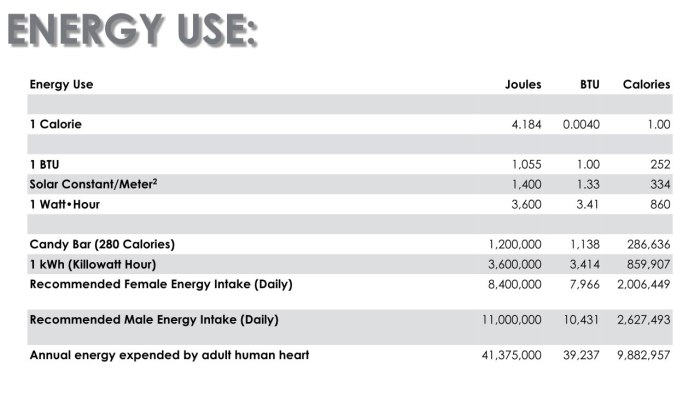
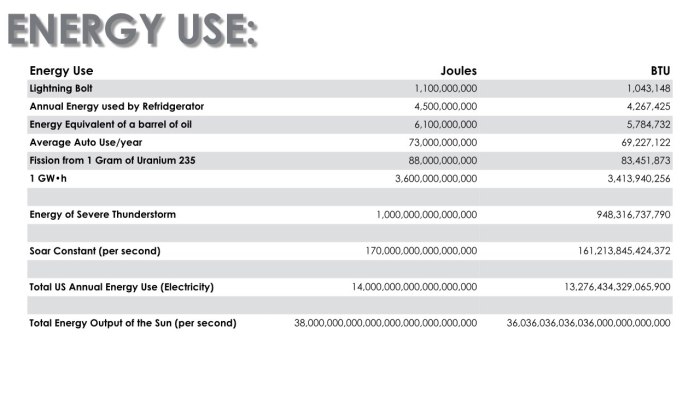

Diagram showing the natural flow of energy on our site. Historically, the Sun would have provided 100% of the sites capacity. This energy would be absorbed by plant life, converted to glucose and then absorbed by animals through digestion. This process would carry through the natural life cycles until it ended as carbon, methane, or other organic compounds that would be recycled through environmental processes.

The site’s current energy use is dependent almost entirely on energy generated, or extracted off site. While oil, gas and coal are technically derived by natural processes, they represent the release of carbon on a scale that is not natural, or healthy for the planets eco systems.

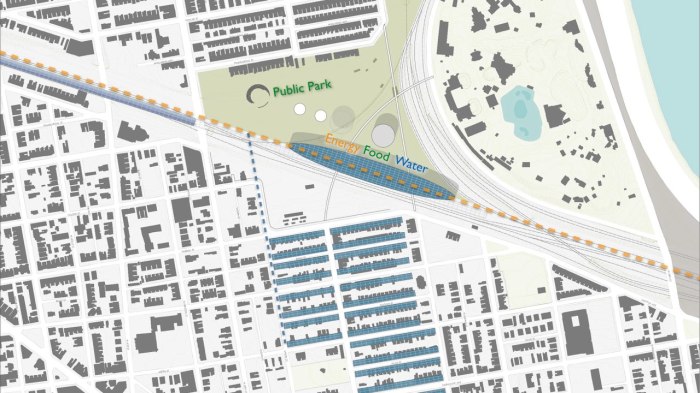
Bordering the train line, and the neighborhood to the south, I am proposing a new power plant that replicates the natural flow of energy through the site.
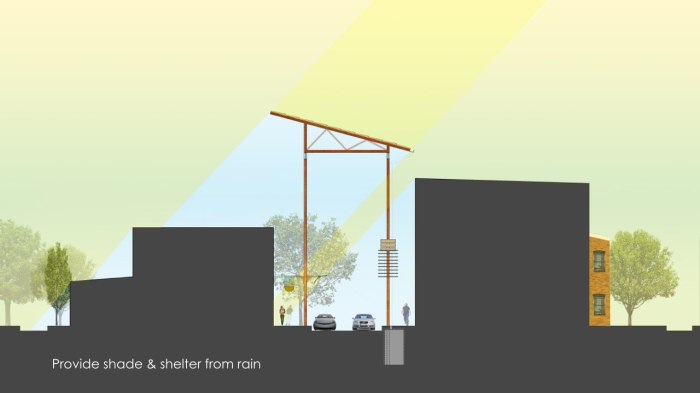
The power plant will filter the suns energy through multiple layers that perform like multiple canopy layers of a forest.
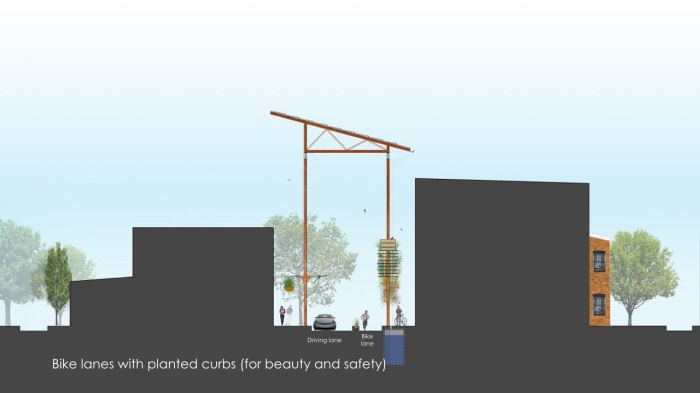
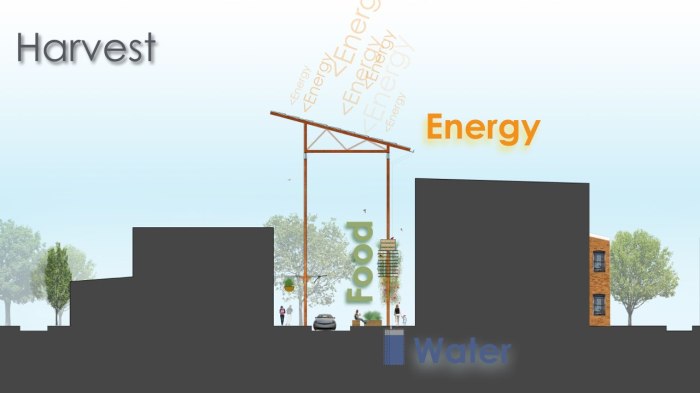
The upper level will convert sunlight into energy. Secondary levels will be used to grow food. Lower levels will be used to turn food and other organic waste into methane and other sources of energy. The building will seek to create a close the loop of energy use on the site.
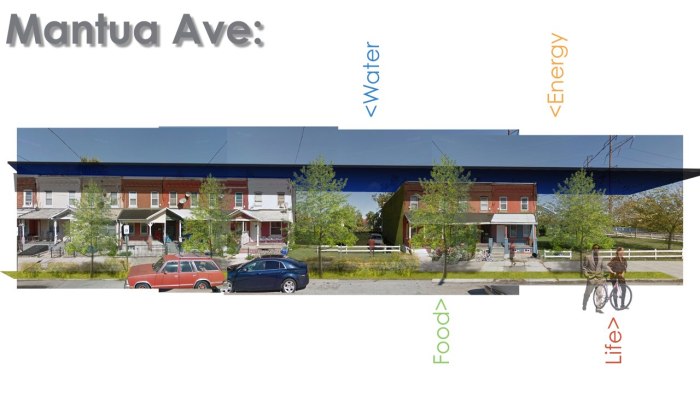
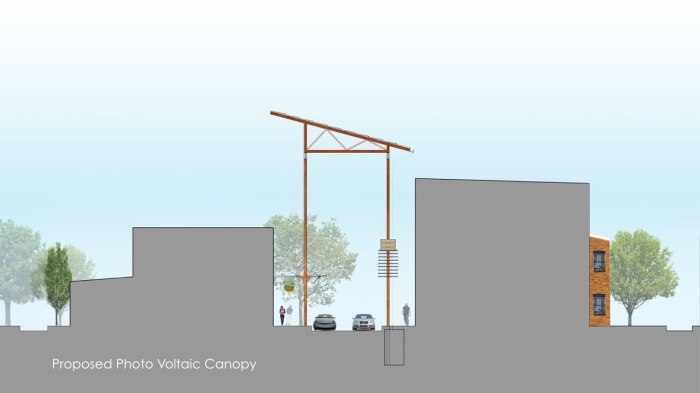
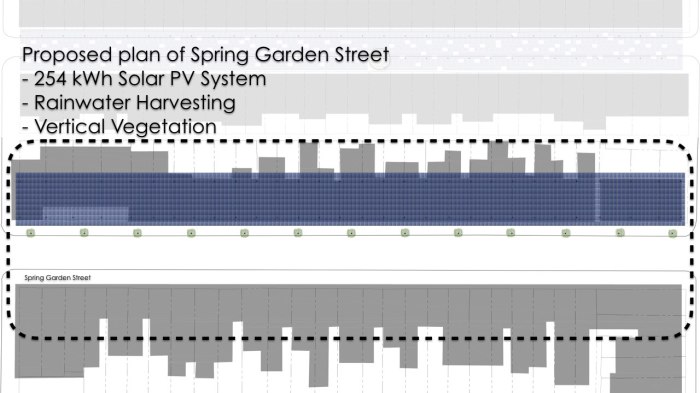
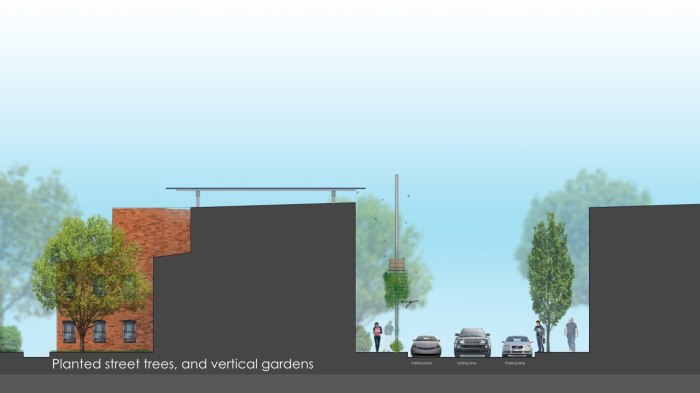
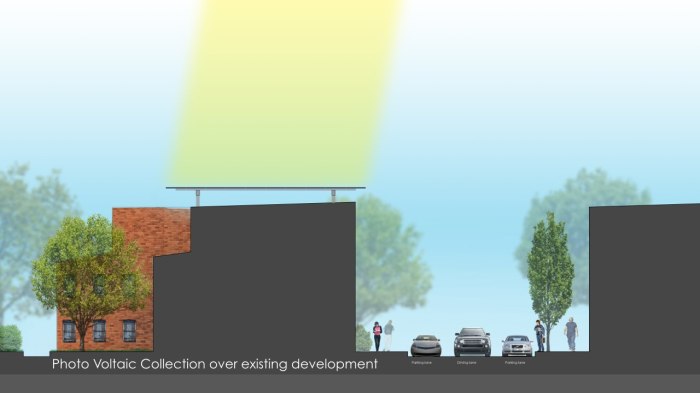
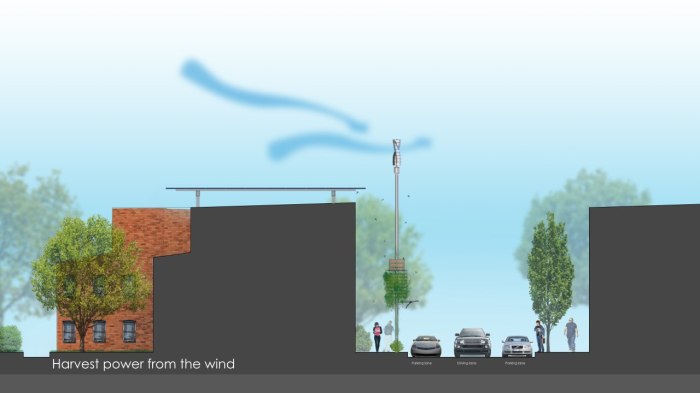
Conceptual rendering of a Photo Voltaic Canopy (shown above). The canopy will create an organizing architecture for the neighborhood that provides shade, shelter, filters water, generates energy and can be used as a framework for future development.




 neil ryan young
An initial reaction and am looking forward to talking more tomorrow about your latest energy thoughts:
1. Setting up a series of “operation” for your urban strategy process is very helpful (i.e. harvest, collect, store, grow…) especially to help set up a framework for your proposal.
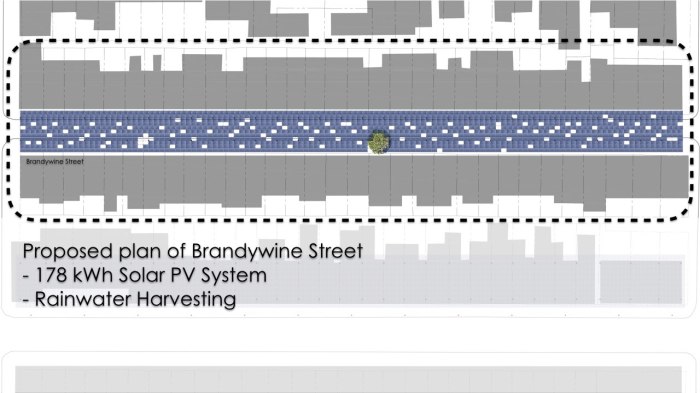
2. Spring Garden and Brandywine Street applications. Why these two streets and why these particular applications? Understand the need to capture solar and wind energy but am curious why how these studies contribute to the greater understanding of the project site – the railyard and the vacated parks?
3. The idea of a “community” street canopy could be interesting as both an energy source and social interaction space. An “emblematic” public space situated within the existing neighborhood that resources/re-distributes energy has potential but should be understood in the context of the neighborhood.
4. What’s the benefit of new infrastructure (the canopy) over the street versus utilizing the existing rooftops (and vacant parcels) for water collection and PV Cell arrays?
5. Would like to see an updated energy flow diagram (in sketch form) that relates to the site area/context – the large vacant spaces, the streetscapes of the neighborhood, the vacant parcels within the blocks, etc. – to understand the extents of the system and how they are integrated.
LikeLike
(1) Thank you for your feedback.
(2) I was responding in part to feedback by other students regarding the need to engage the southern part of our site. This initial section exercise was meant in part to look at how the infrastructure would fit into the context of the neighborhood. Tomorrow evening, I will be presenting these along with other areas of the site (the train yard and adjacent streets).
(3) I am interested in this as an organizing archetype, especially on the streets with multiple vacant sites. I will be showcasing this tomorrow night (I wanted this to me more of a surprise).
(4) I am most interested in using the PV array as a canopy over vacant spaces, providing shade, filtered light, protection from elements, etc. (I am somewhat inspired by Elemental at the moment- http://www.elementalchile.cl/en/projects/monterrey/ )
(5) Working on it. I just finished an energy conversion spreadsheet that shows energy in various scales and units.
LikeLike
A surprise indeed.
Thinking about this canopy structure as an organizing archetype for the site could be very interesting – very curious how it…A) adjusts itself to varying site conditions within the neighborhood and B) how it “plugs into” the larger railyard site. I look forward to seeing a sketch diagram of the site and how this archetype would be applied to the site.
Elemental is a great reference to look into…
How are you imagining this new energy infrastructure/development? Is it attempting to re-think rowhouse urbanism in terms of energy and sustainability? Really interested to see the potential kit of parts to this energy-based community urbanism.
LikeLike
Neil, I am impressed with your ability to take such detailed analysis and then use it to compose a series of concise and informational diagrams. After seeing these, I understand your energy goal and see you have a completely focused idea now. Your idea to build over the streets is unique and unexpected and I believe it could be successful. However, what these detailed series of section cuts is missing is context. And by context I mean their overall location within the site. Are you just going to do this on Spring Garden Street or on others as well? Wondering how you are going to justify these placements. I’m also curious about the other programs we are supposed to incorporate into this project, the gardens, research area, cafes, markets, etc. You showed me some examples of this in class but I can’t remember what they looked like exactly, if you could please post them that’d be extremely helpful. It would be nice to see these programs represented in plan for the overall site in addition to the sections/elevations you showed me in class to give the viewer an awareness of the context and the programs’ relationships to one another. Thanks again for your advice with my project last class, I look forward to what you come up with next week!
-Karlene
LikeLike
Not ironically, you presentation shows a great degree of energy. I appreciate your razor focus on a specific, actionable design issue and solution. What I appreciate is that your concept would work under a variety of other site development options offered in class. I look forward to seeing what your analysis is regarding the generation of energy in this community (sun vs. wind, etc.). Right now the canopy look a bit odd in scale compared to the buildings. I imagine that you are exploring more the idea, not details of its design. I look forward to seeing how you plan to integrate the canopy into the site – do you plan to take cues from existing structures? How do you handle materiality, etc.?
LikeLike
Wow, this energy idea is really taking off for you. The amount you accomplished in one week regarding execution is great!. What is happening with the rainwater? Is it being uses for the plants on the pole or along the walkway? I would love to see your vignettes of your park idea.
LikeLike